
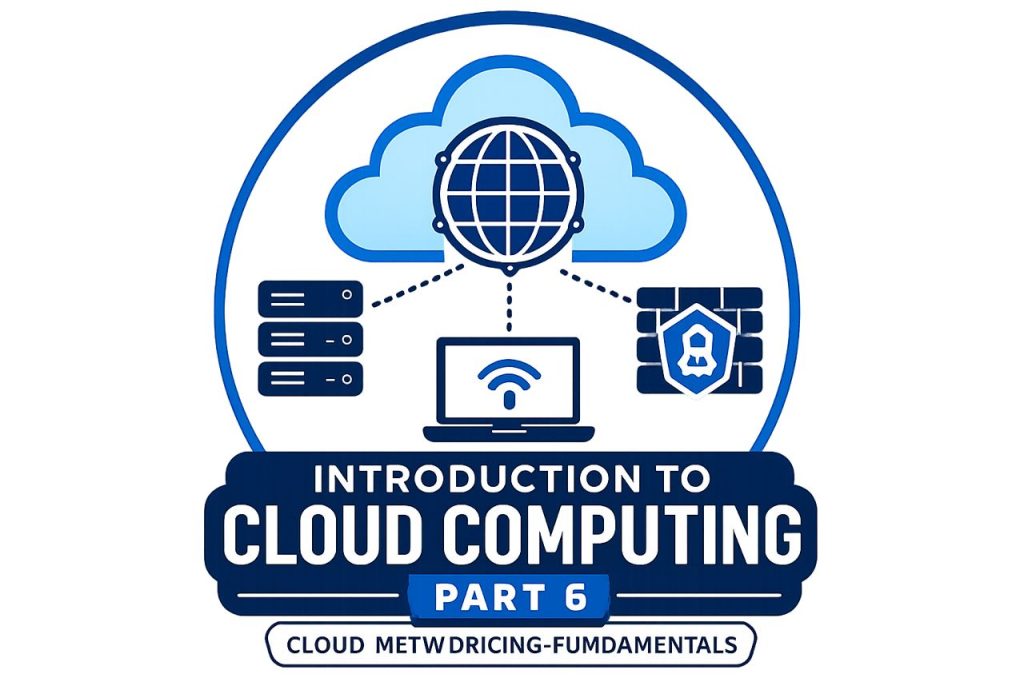
Cloud Networking Fundamentals:
Cloud networking is a core part of cloud computing. It allows cloud resources, applications, and users to communicate securely over the internet and private networks. Understanding networking is essential for anyone pursuing a career in cloud engineering.
⸻
1. What Is Cloud Networking?
Cloud networking refers to the use of networking components and services hosted in a cloud environment.
It enables:
* Communication between cloud resources
* Internet connectivity
* Secure access to applications and data
* Hybrid connections between on-premises and cloud environments
Cloud providers manage much of the underlying infrastructure, making networking more scalable and flexible.
⸻
2. Virtual Networks (VNets and VPCs)
Cloud platforms use virtual networks to isolate and organize resources.
Examples:
* Microsoft Azure uses Virtual Networks (VNets)
* AWS uses Virtual Private Clouds (VPCs)
These networks allow:
* Secure communication between resources
* IP address management
* Subnet creation
* Traffic control
Virtual networks behave similarly to traditional on-premises networks but are hosted in the cloud.
⸻
3. Public and Private IP Addresses
Cloud resources can use:
* Public IP addresses for internet access
* Private IP addresses for internal communication
Public IPs allow users to access websites or services hosted in the cloud, while private IPs are used securely inside the network.
4. Subnets
Subnets divide a virtual network into smaller sections.
Benefits of subnets include:
* Better organization
* Improved security
* Easier traffic management
* Separation of workloads
For example, a company may place:
* Web servers in one subnet
* Databases in another subnet
This reduces unnecessary exposure between systems.
⸻
5. Network Security Groups (NSGs) and Firewalls
Cloud networking includes security controls to protect resources.
Network Security Groups help:
* Allow or deny traffic
* Control inbound and outbound connections
* Apply security rules to resources and subnets
Firewalls provide another layer of protection by filtering and monitoring network traffic.
⸻
6. VPN and Hybrid Connectivity
Organizations often connect on-premises environments to the cloud using:
* VPN connections
* ExpressRoute or dedicated private links
This creates a hybrid environment where cloud and local infrastructure work together securely.
⸻
7. Load Balancing
Load balancers distribute traffic across multiple servers or resources.
Benefits include:
* High availability
* Better performance
* Reduced downtime
* Scalability during high traffic periods
Load balancing is widely used in cloud environments to maintain reliable applications and services.
⸻
Key Takeaway
Cloud networking provides the foundation for communication, security, and connectivity in cloud environments. Understanding concepts such as virtual networks, subnets, IP addresses, and network security is essential for building and managing modern cloud solutions.