
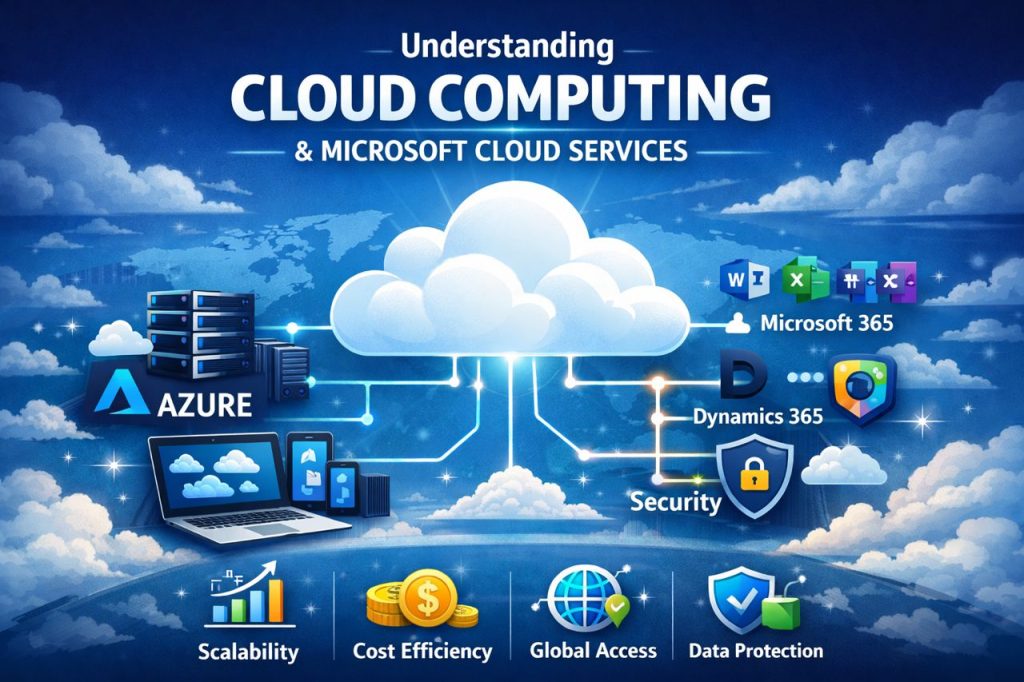
Cloud Computing for Beginners – Part 1
What Is Cloud Computing?
Cloud computing is one of those technology terms that gets used everywhere, yet many people feel unsure about what it actually means. When I first started learning about the cloud, I realized that understanding this one concept properly makes everything else much easier. This post is the first part of my beginner cloud computing series, created to help anyone who is curious about the cloud and wants a simple, clear explanation.
What Does Cloud Computing Mean?
At its core, cloud computing means using computing services over the internet instead of owning and managing physical hardware. These services can include servers, storage, databases, networking, and software.
Traditionally, companies had to buy servers, store them in offices or data centres, and maintain them themselves. With cloud computing, those resources are provided online by cloud providers, and users can access them whenever they need to.
In simple terms, the cloud lets you use technology as a service rather than as something you have to physically own.
Everyday Examples of the Cloud
You may already be using cloud computing without realizing it. For example:
•Sending emails through Outlook or Gmail
•Saving files to OneDrive or Google Drive
•Watching movies on streaming platforms
•Joining online meetings through Microsoft Teams or Zoom
All of these services run in the cloud, allowing you to access your data and applications from anywhere with an internet connection.
Why Do People and Businesses Use Cloud Computing?
Cloud computing offers many benefits, which is why it has become so widely adopted.
One major advantage is cost efficiency. Instead of paying upfront for expensive hardware, users pay only for the resources they use. This makes cloud computing accessible to individuals, small businesses, and large organisations.
Another key benefit is scalability. Cloud resources can be increased or reduced depending on demand. For example, a business can scale up during busy periods and scale down when demand is lower.
Cloud computing also supports remote access and flexibility. People can work, learn, and collaborate from almost anywhere, which is especially important in today’s digital world.
Is the Cloud Secure?
A common question beginners ask is whether the cloud is safe. Cloud providers invest heavily in security, including physical security, data protection, and compliance standards. While no system is completely risk-free, cloud services are often more secure than traditional on-premises systems when used correctly.
Security in the cloud is a shared responsibility between the cloud provider and the user, a concept I’ll cover later in this series.
Why Learning Cloud Computing Matters
Cloud computing is now a core part of modern IT and digital services. Learning the basics opens the door to many opportunities, whether you’re aiming for a career in technology or simply want to understand how today’s systems work.
For me, learning cloud computing has been about building strong foundations first. This blog series is part of that journey, and I’m sharing it in the hope that it helps others who are just starting out.
What’s Next?
In Part 2, I’ll explain the different types of cloud computing—public, private, and hybrid—and how they’re used in real life.
Thanks for reading, and feel free to join me as I continue learning and exploring cloud computing step by step.